
Oh my goodness, friends, if there’s one dish that screams “comfort food with a kick” to me, it’s Pad Thai! Seriously, who can resist those perfectly chewy noodles, that incredible balance of sweet, sour, and savory, all tossed together in a symphony of flavors? This isn’t just *any* Pad Thai recipe; this is THE one. I remember the first time I tasted truly authentic Pad Thai on a backpacking trip through Thailand years ago – it was a tiny street stall, sizzling wok, and my mind was absolutely blown! I spent years trying to recreate that magic in my own kitchen, and let me tell you, it took a lot of noodle-soaking and sauce-tasting experiments, but I finally cracked the code. This recipe is my absolute pride and joy, bringing all those vibrant, complex flavors right to your home. And guess what? It’s surprisingly easy, even for a weeknight meal!
Why You’ll Love This Pad Thai Recipe
Okay, so why *this* Pad Thai recipe? Because it's not just another recipe; it's a game-changer! You're going to fall head over heels for it because:
- It's super quick to whip up – perfect for those busy weeknights when you want something amazing without all the fuss.
- The taste is SO authentic, you'll feel like you've been transported straight to the bustling streets of Bangkok!
- You can totally make it your own! Swap out proteins, add extra veggies – it's incredibly customizable.
- It's really versatile and can be adapted for different dietary needs without sacrificing flavor.
The Irresistible Flavor of Homemade Pad Thai
Get ready for a flavor explosion, seriously! This homemade Pad Thai hits all the right notes: that tangy sourness from the tamarind, a little sweetness, the perfect salty kick, and a savory depth that'll have you craving more. It's all about those fresh ingredients coming together in perfect harmony. Trust me, it's pure deliciousness!
Essential Ingredients for Authentic Pad Thai
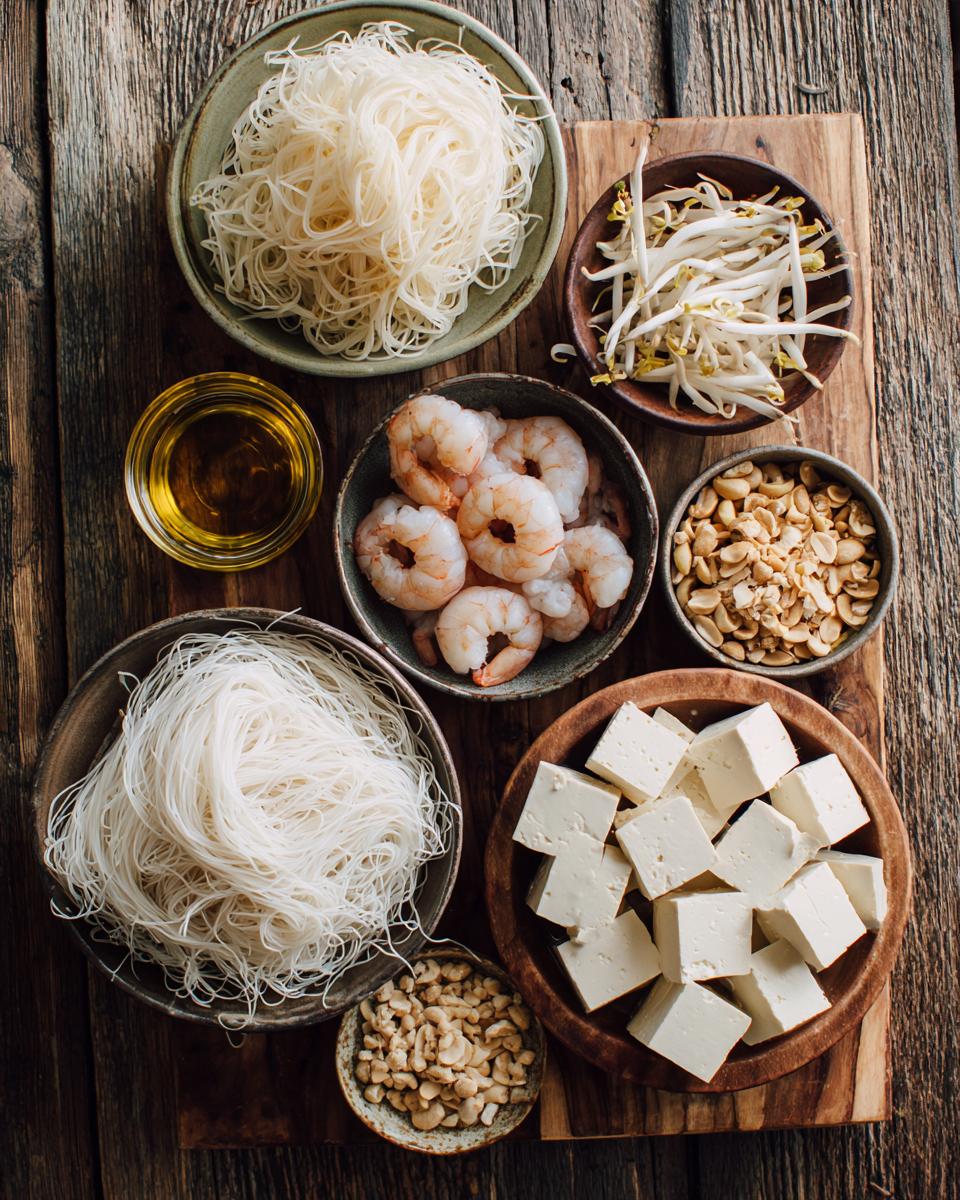
Alright, let’s talk ingredients! Because, honestly, the magic of this Pad Thai really starts with getting the right stuff. Don’t worry, it’s nothing too wild, but paying attention to these details makes all the difference for that authentic taste. You’ll need about 8 ounces of those lovely flat rice noodles – make sure they’re not the super thin vermicelli kind, we want some chew! Then, grab 2 tablespoons of good vegetable oil, and 8 ounces of shrimp, already peeled and deveined to save you a step (unless you love doing that, then go for it!).
Next up, 2 cloves of garlic, minced up nice and fine. And for that essential Pad Thai crunch and freshness, a cup of bean sprouts. We can’t forget the tofu! About 1/2 cup of firm tofu, pressed to get out extra water, and then cut into small, bite-sized cubes. A 1/4 cup of chopped roasted peanuts for garnish and texture, and 2 large eggs, lightly beaten and ready to scramble. For the finishing touches, 2 tablespoons of fresh cilantro, chopped, and a lime, cut into wedges for that crucial squeeze of brightness. Oh, and of course, 1/4 cup of my special Pad Thai sauce – we’ll get to that next!
Crafting Your Signature Pad Thai Sauce
Now, this sauce? This is where the real flavor party happens! It’s super easy to whip up, I promise. Just grab a small bowl and combine 2 tablespoons of tamarind paste (this is *key* for that tangy kick!), 2 tablespoons of fish sauce (don’t skip it, it adds incredible depth!), and 1 tablespoon of sugar. Whisk it all together until that sugar completely dissolves. If you’re feeling adventurous and want that extra layer of umami, a teaspoon of dried shrimp paste is fantastic, but it’s totally optional if you can’t find it or prefer without. Taste it, adjust it – make it yours!
Step-by-Step Guide: How to Make Pad Thai
Okay, you’ve got your ingredients prepped, your sauce is ready, and you’re practically salivating, right? Good! Now, let’s get cooking. Don’t be intimidated; it’s a quick process once everything is ready. First things first, get those noodles soaking. While they’re doing their thing, heat your wok or a large skillet over medium-high heat. You want it nice and hot! Add your 2 tablespoons of vegetable oil. Once it’s shimmering, toss in your shrimp. These little guys cook fast, so just 2-3 minutes until they’re beautifully pink. Scoop them out and set them aside for a moment, they’ll come back into play later!
Next up, into that same wok goes your minced garlic. Stir-fry it for just about 30 seconds until you can smell that amazing aroma – don’t let it burn! Then, add your tofu cubes. Let them get nice and lightly browned, about 3-5 minutes, giving them a little stir now and then. Now, here’s a fun part: push that tofu to one side of the wok, creating an empty space. Pour your lightly beaten eggs into that space and scramble them up until they’re cooked through. See? Multi-tasking in the kitchen!
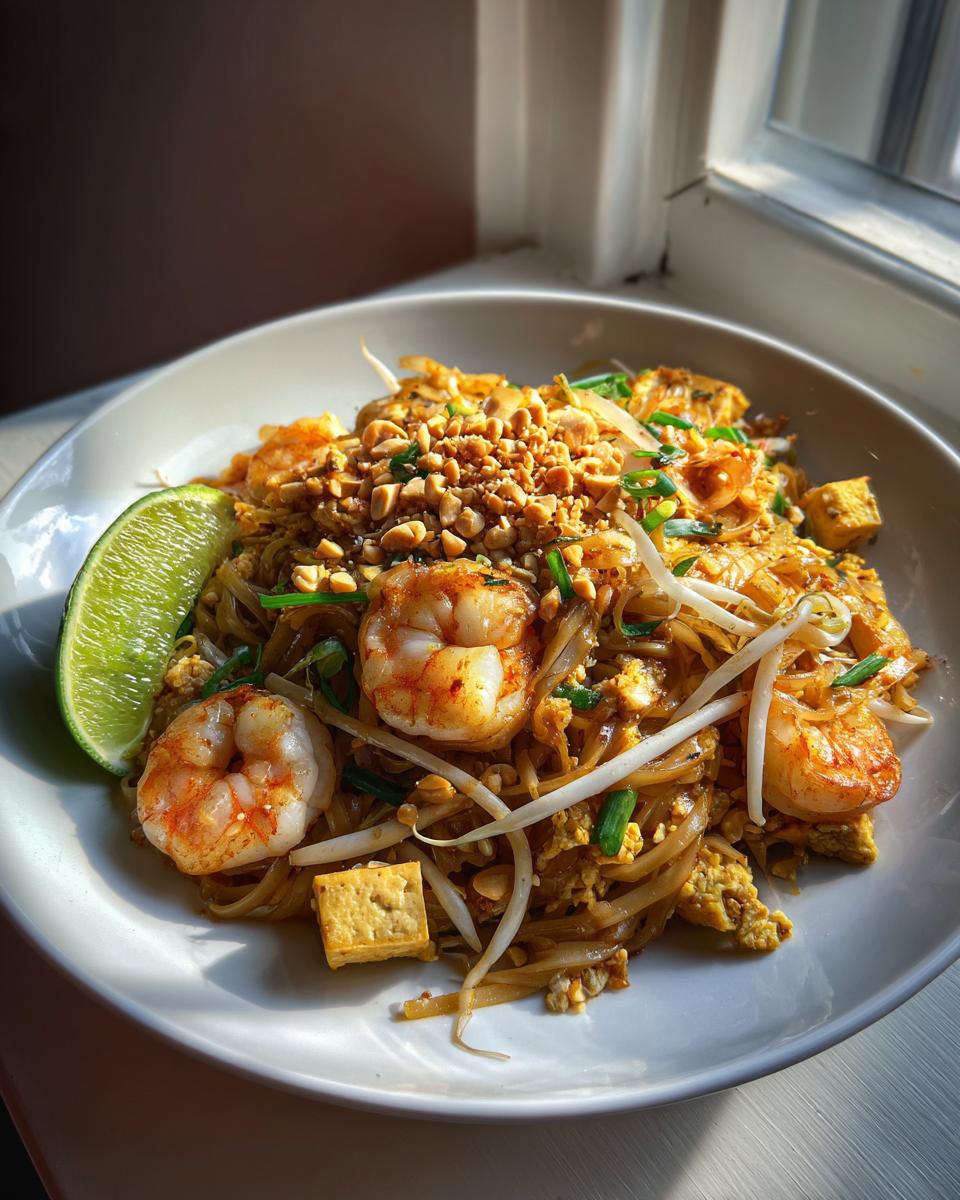
Now for the main event: add your drained noodles to the wok, right alongside the tofu and scrambled egg. Pour that glorious Pad Thai sauce all over everything. Get in there with your spatula or tongs and toss, toss, toss! You want every single noodle coated evenly. Keep stirring for about 3-5 minutes, or until those noodles are perfectly tender and have absorbed all that delicious sauce. Finally, stir in your bean sprouts and the cooked shrimp you set aside earlier. Cook for just another 1-2 minutes, just long enough to heat everything through. Take it off the heat, garnish with those chopped peanuts, fresh cilantro, and a squeeze of lime. Serve it up immediately and prepare for compliments!
Preparing Your Noodles for Perfect Pad Thai
This step is crucial, seriously! Grab your 8 ounces of flat rice noodles and pop them into a big bowl. Cover them with warm water – not boiling, just warm to the touch. Let them hang out for about 20-30 minutes. You want them pliable and bendy, but still with a little firmness, not mushy! Drain them really well. This “al dente” state is what gives your Pad Thai that perfect chewy texture.
Stir-Frying Your Pad Thai to Perfection
Okay, the key to a great stir-fry is heat, heat, heat! Get that wok or skillet smoking hot over medium-high heat. Everything cooks super fast here, so have all your ingredients prepped and ready to go. You’ll add things in stages – shrimp first, then garlic, then tofu, then eggs. This keeps everything cooking evenly. Once the noodles and sauce go in, keep tossing! You want that sauce to coat every strand and get slightly caramelized. Don’t overcrowd the pan, and keep those quick cooking times in mind for a vibrant, flavorful dish!
Expert Tips for the Best Pad Thai
Alright, you’re practically a Pad Thai master now, but here are a few little secrets from my kitchen to make sure yours is absolutely *chef’s kiss* perfect every single time! First, and I can’t stress this enough: **prep everything ahead of time.** Chop your garlic, press your tofu, measure out your sauce – seriously, have it all ready to go because once that wok is hot, things move fast! Also, make sure your wok or skillet is screaming hot. A hot pan means beautiful caramelization and prevents things from getting soggy. And finally, my absolute favorite tip: **taste, taste, taste!** Before you serve, give it a little nibble. Does it need a tiny bit more lime? A pinch more sugar? A dash more fish sauce? Adjust it to *your* perfect balance!
Customizing Your Pad Thai
This recipe is amazing as is, but don’t be afraid to play around! Swap out the shrimp for thinly sliced chicken or beef, or go full vegetarian with extra tofu and maybe some mushrooms. Want more heat? Add a pinch of red chili flakes to your sauce or garnish. Feel free to toss in some thinly sliced carrots or bell peppers for extra veggies and color. It’s *your* Pad Thai, so make it exactly how you love it!
Common Questions About Pad Thai
I get a lot of questions about making Pad Thai, so I thought I’d answer a few of the most common ones right here! Don’t be shy, we all started somewhere!
Q1. Can I make this Pad Thai vegetarian? Absolutely, yes! This recipe is super flexible. Just skip the shrimp and either add more pressed firm tofu, or toss in some sliced mushrooms or extra veggies like bell peppers and carrots. You might also want to ensure your fish sauce is a vegetarian alternative, or just use a bit more soy sauce if that’s your preference. The core flavors of the sauce still shine through beautifully!
Q2. What kind of noodles are best for Pad Thai? For authentic Pad Thai, you really want flat, wide rice noodles. They’re sometimes labeled “rice stick noodles.” Avoid the super thin vermicelli or the really broad, fresh noodles. The medium-width dried ones are perfect because they soak up all that amazing sauce and give you that satisfying chew. Getting the noodle soak just right is key!
Q3. How do I store leftover Pad Thai? Great question! It’s rare to have leftovers, but if you do, pop it in an airtight container in the fridge as soon as it’s cooled down a bit. It’ll be good for 2-3 days.
Storing and Reheating Your Pad Thai
If you’re lucky enough to have some Pad Thai left over, just tuck it into an airtight container and keep it in the fridge for up to 3 days. To reheat, I like to gently warm it in a skillet over medium heat, maybe with a tiny splash of water or broth to loosen the noodles, until it’s hot all the way through. Microwaving works too, but the skillet helps keep that delicious texture!
Estimated Nutritional Information for Pad Thai
Okay, for those of you keeping an eye on the numbers, here’s a quick look at the estimated nutritional values per serving of this delicious Pad Thai. Just remember, these are estimates and can totally vary based on the exact brands you use, how much oil you add, and any customizations you make! Per serving, you’re looking at roughly 550 Calories, 15g Sugar, 1200mg Sodium, 20g Total Fat (4g Saturated, 12g Unsaturated, 0g Trans), 60g Carbohydrates, 5g Fiber, 30g Protein, and 200mg Cholesterol. Enjoy!
Your Delicious Pad Thai Awaits
So, there you have it, my friends! My absolute favorite, tried-and-true Pad Thai recipe. I’m practically bouncing in my seat just thinking about you making it. Seriously, go whip up a batch, taste that incredible flavor, and then come back and tell me all about it in the comments! Did you customize it? Did you nail that noodle texture? I want to hear everything! And please, please, share your amazing creations on social media. Happy cooking!
PrintPad Thai from Scratch
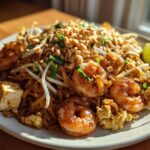
Pad Thai is a popular Thai stir-fried noodle dish. It typically includes rice noodles, shrimp, peanuts, scrambled egg, and bean sprouts, among other ingredients. The dish is flavored with a sauce that usually contains tamarind paste, fish sauce, dried shrimp, garlic, and sugar. It is often garnished with lime wedges and chopped roasted peanuts.
- Prep Time: 20 minutes
- Cook Time: 20 minutes
- Total Time: 40 minutes
- Yield: 2 servings 1x
- Category: Main Course
- Method: Stir-fry
- Cuisine: Thai
- Diet: None
Ingredients
- 8 ounces flat rice noodles
- 2 tablespoons vegetable oil
- 8 ounces shrimp, peeled and deveined
- 2 cloves garlic, minced
- 1 cup bean sprouts
- 1/2 cup firm tofu, pressed and cut into small cubes
- 1/4 cup chopped roasted peanuts
- 2 large eggs, lightly beaten
- 2 tablespoons chopped fresh cilantro
- 1 lime, cut into wedges
- 1/4 cup Pad Thai sauce (see notes for recipe)
Instructions
- Soak rice noodles in warm water for 20-30 minutes, or until pliable but still firm. Drain well.
- Heat vegetable oil in a large wok or skillet over medium-high heat. Add shrimp and cook until pink, about 2-3 minutes. Remove shrimp and set aside.
- Add minced garlic to the wok and stir-fry for 30 seconds until fragrant.
- Add tofu and cook until lightly browned, about 3-5 minutes.
- Push tofu to one side of the wok. Pour beaten eggs into the empty space and scramble until cooked through.
- Add drained noodles to the wok along with the Pad Thai sauce. Toss everything together to coat the noodles evenly. Cook for 3-5 minutes, or until noodles are tender.
- Stir in bean sprouts and cooked shrimp. Cook for another 1-2 minutes, until heated through.
- Remove from heat. Garnish with chopped roasted peanuts, fresh cilantro, and lime wedges. Serve immediately.
Notes
- For the Pad Thai sauce: Combine 2 tablespoons tamarind paste, 2 tablespoons fish sauce, 1 tablespoon sugar, and 1 teaspoon dried shrimp paste (optional) in a small bowl. Whisk until sugar dissolves.
- Adjust the sweetness, sourness, and saltiness of the sauce to your preference.
- You can substitute chicken or beef for shrimp, or use extra tofu for a vegetarian version.
- For extra spice, add a pinch of chili flakes to the sauce.
Nutrition
- Serving Size: 1 serving
- Calories: 550
- Sugar: 15g
- Sodium: 1200mg
- Fat: 20g
- Saturated Fat: 4g
- Unsaturated Fat: 12g
- Trans Fat: 0g
- Carbohydrates: 60g
- Fiber: 5g
- Protein: 30g
- Cholesterol: 200mg